
A quoted lead time is built from press capacity, die status, colour batching and machining setup — not from how much aluminum is in the warehouse. Here is where the weeks actually go, the six things that push them out, and what buyers can lock down before the PO.
A buyer orders on a Monday, is quoted twelve days, and on day fourteen is still waiting for a trucking note. Almost always the delay was visible on day one — not a broken promise, but a queue you could have measured before the order: behind a press, in a colour change on the anodizing line, or in a drawing that was not quite frozen. This is a practical map of where lead time goes inside an extrusion plant, and what you can control from your side of the order.
What a quoted lead time is made of
Every profile passes the same route: billet, die, press, surface treatment (if specified), CNC machining (if specified), inspection, packing. The quoted number is the sum of the queues in front of each step plus the run time at each step. Run time is short. Queues are what you are really buying.
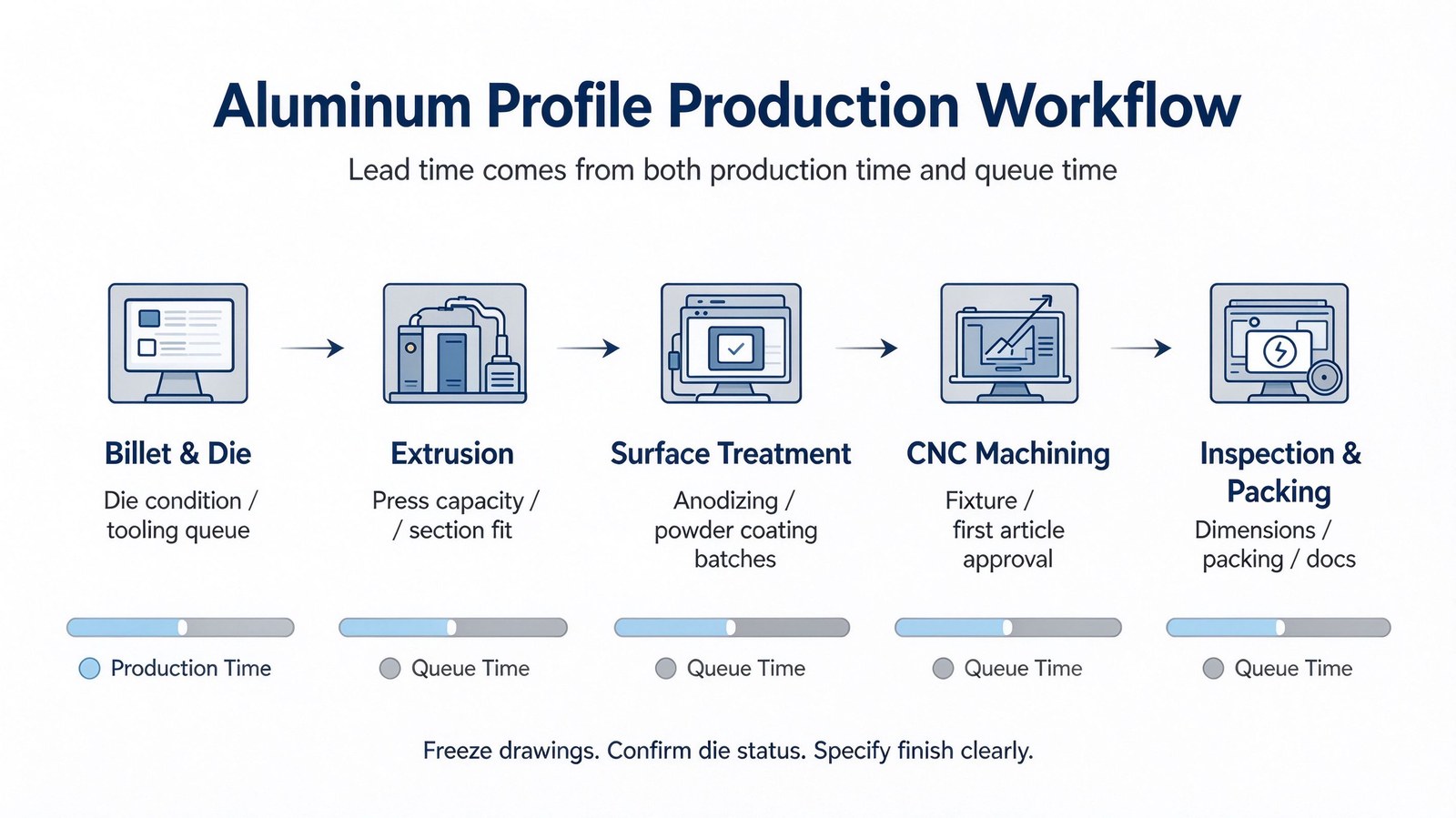
| Stage | What happens | Typical run time | What sets the queue |
|---|---|---|---|
| Billet and die | Billet cut and preheated; die pulled, cleaned, nitrided | 1 day | whether the die already exists and is proven |
| Extrusion | Billet pushed at 450–500 °C, stretched, cut, aged | 1–2 days | which press your section fits |
| Surface treatment | Anodizing or powder coating, racked in batches | 3–4 days | colour batching and rack capacity |
| CNC machining | Fixture, first article, production run | 3–5 days | drawing clarity and fixture build |
| Inspection and packing | Dimensional checks, protective wrapping, crating | 1–2 days | packing specification and documents |
Note: lead times above are standard estimates, subject to profile complexity, order volume and production schedule. They are an indication for planning, not a contractual delivery date.
The standing figures for that route at SYHARVEST are 5–7 days mill finish, around 12 days with anodizing or powder coating, and 15–18 days when machining is included. Those are the numbers our planners work to — and the numbers that slip when one of the causes below hits.
Cause 1: the press, not the aluminum, is the bottleneck
We run eight presses in Foshan: three 660-tonne, two 1,100-tonne, one 1,800-tonne, one 2,500-tonne and one 3,600/4,000-tonne. Billet diameters run from 90 mm to 254 mm, and the largest sections we can take are roughly 320 mm circumscribed circle.
A 250 mm housing cannot go on a 660-tonne press — it needs the big one, and there is exactly one of those. If two projects with large sections land in the same week, one of them waits. A small decorative profile, meanwhile, wastes capacity on the 4,000-tonne press, so it is grouped with similar jobs.
What this means for you: lead time depends on which press your section fits and what else is booked on it, not on how much metal sits in the warehouse.
Cause 2: a new die is a project, not a purchase
If the die exists and is proven, your order can be inside the press queue within days. If it does not, the die has its own route: die cut, trial run, sample measurement, correction, re-trial. One to three correction rounds is normal on a new section, and each round is measured in days, not hours. Only after the sample is approved does volume extrusion start.
Two orders that look identical on paper — same profile, same quantity — can differ by two weeks purely because one of them needs a die cut and the other does not. That is also why we quote tooling time separately from extrusion time, instead of folding it into one optimistic number.
Cause 3: surface treatment is batched, and one line is one line
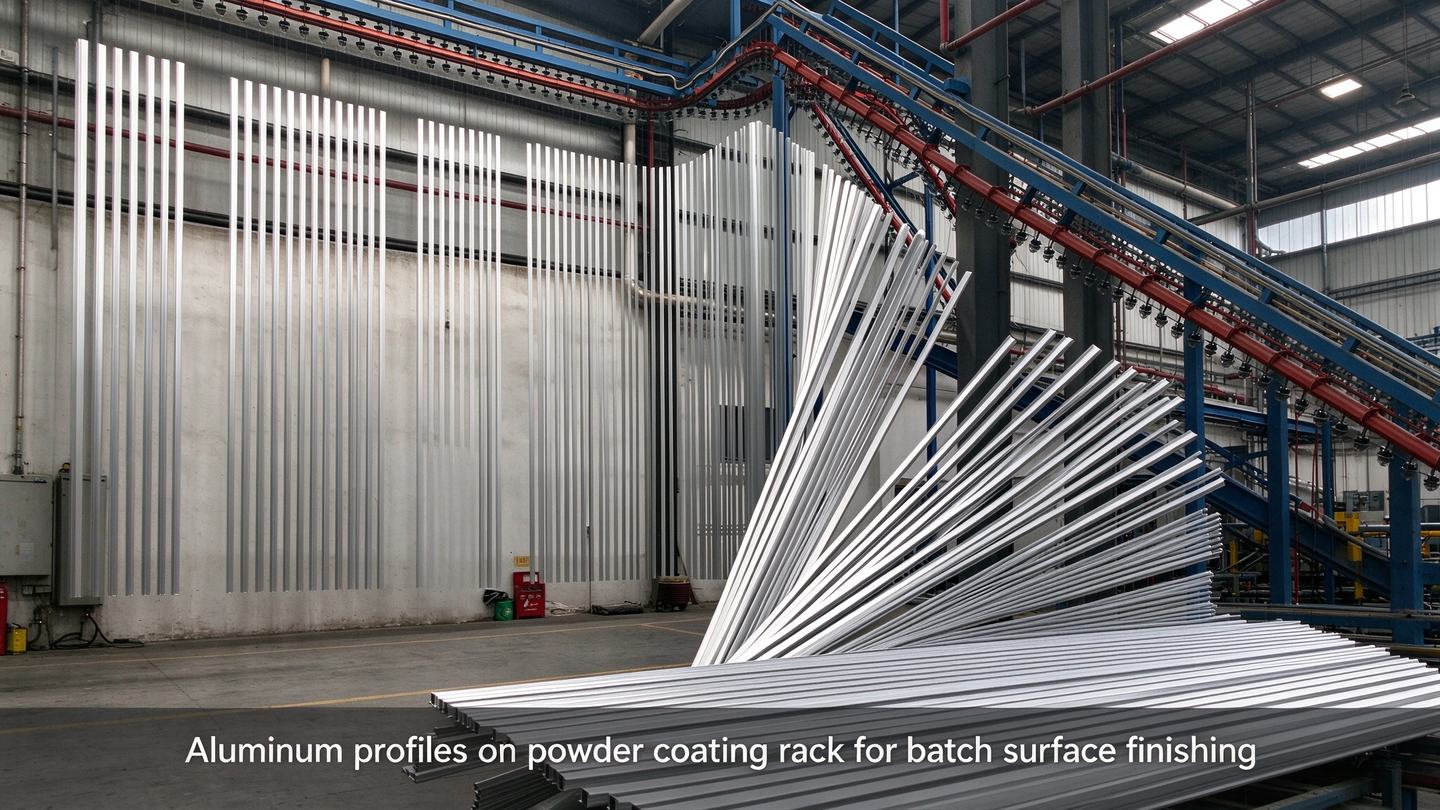
We finish in-house: one horizontal anodizing line, one vertical powder coating line, electrophoresis optional. That is good for control — no trucking between plants, no argument about whose fault a scratch is — but it also means finishing capacity is finite and organised in batches.
- Colour changes cost time. Racking, tank time and cleaning between shades mean light and dark colours are grouped. Your black parts may wait for the next black batch rather than run the moment they are extruded.
- Thickness changes tank dwell. 10 µm for interior profiles and 15–20 µm for exterior or coastal exposure are different recipes; a mixed batch is planned, not improvised.
- Rack space is physical. Long profiles need long racks; a full line is a full line.
This is the most common reason a "12-day" order becomes 16 days: the buyer specified a custom RAL and the plant is running standard colours that week.
Cause 4: machining sequence and the first article
Machining can sit before or after finishing, and the choice changes the schedule:
- Machine before anodizing: chips and coolant must be removed, threaded holes must be masked, and any scratch after finishing is scrap.
- Machine after anodizing: the finished surface has to survive clamping, which means soft jaws and careful handling.
Either way the first article must be measured and approved before the run. A fixture that does not exist yet adds days that were never in the extrusion quote, and one ambiguous dimension on the drawing stops the job until the answer arrives.
Cause 5: the drawing is not frozen
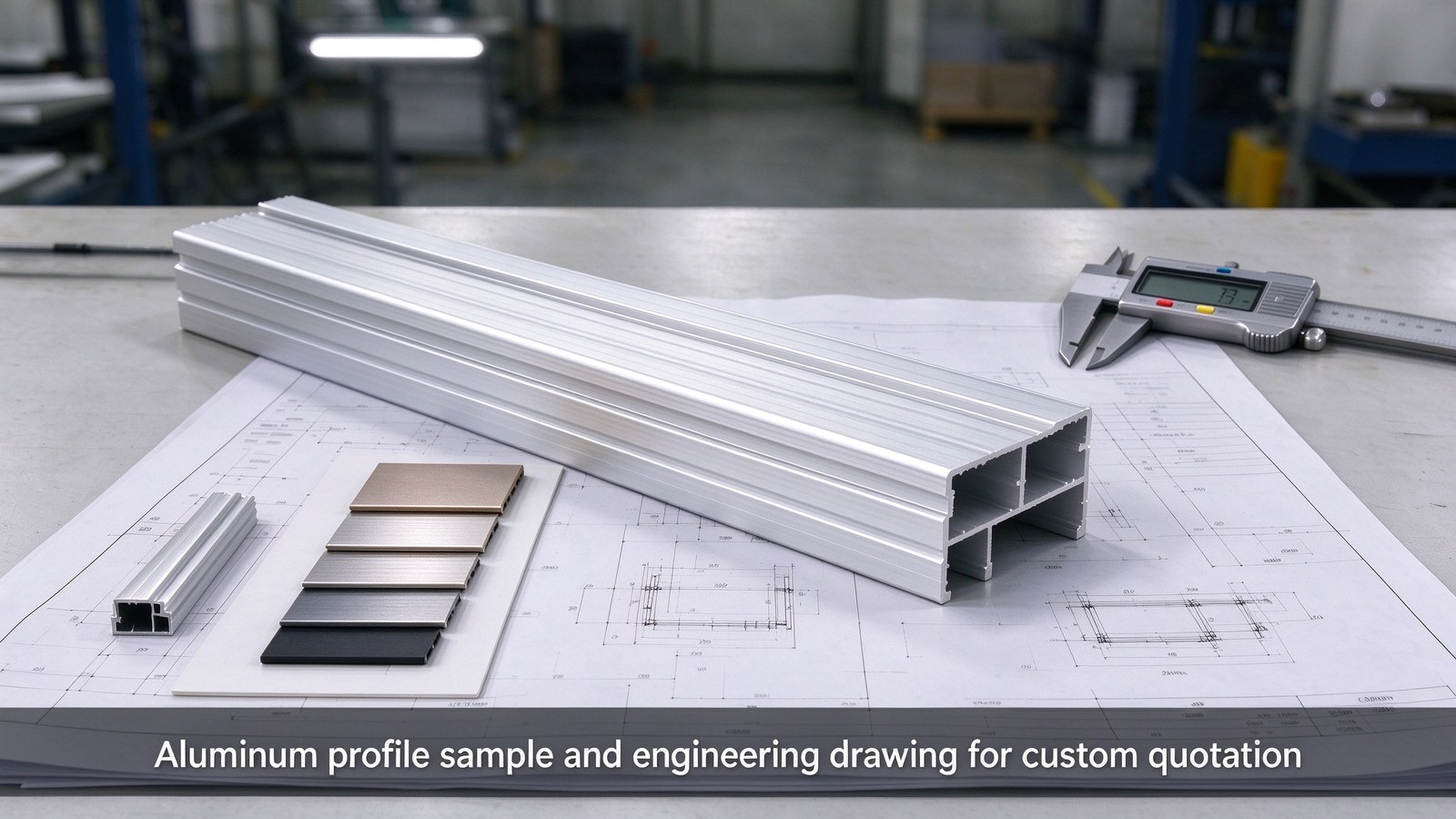
Every revision after the PO costs a queue position. A tolerance changed on Thursday can mean a re-quote, a re-programmed toolpath, or a die correction. A small change looks free to the buyer; on the floor it means the job leaves the queue and rejoins it at the end.
Cause 6: inspection, packing and documents
The last two days are real work: dimensional checks, surface inspection under controlled light, protective film, foam, crating designed for a sea container, and the paperwork — mill certificate, packing list, invoice.
Seven things buyers can do
- Freeze the drawing before the PO. One revision a week costs a week.
- Confirm whether a qualified, existing die is available, and let die-making run ahead of the order instead of holding the whole PO for a "complete package".
- Approve colour on a physical sample, once, in writing. RAL numbers and photographs are not the same thing.
- Specify finish in numbers — anodizing thickness in µm (10 µm for interior parts, 15–20 µm for exterior or coastal), powder-coat gloss in gloss units at 60° (a satin finish sits around 30 GU, matte below 15), and a colour standard such as RAL. Vague finish specs generate sample loops.
- Split the delivery if your build schedule needs an early batch. A first-article shipment is often enough to start assembly.
- Give your installation date, not just your PO date. With the real date we can re-sequence presses; without it we can only quote a generic lead time.
- Book early around peak periods — before Chinese New Year in particular, when container space and press time tighten together.
What we hold ourselves to
SYHARVEST extrudes in 6063, 6061 and 6005, finishes in-house and machines in-house, on a 20,000 m² plant in Foshan with 94 people and a quality system certified to ISO 9001:2015 (certificate 00225Q26954R2M, scope covering extrusion and surface treatment). The lead times above are what we plan to; when something slips, we tell the buyer which stage slipped and by how many days, because a schedule you can plan around is worth more than a promise that arrives late.
Send us your drawing, quantity, finish and required date, and we will reply with a price and a clear production schedule — the press, finishing and machining time slots your order will actually sit in, dated before you commit to the PO.
Interested in Our Products?
Contact us today for a professional quotation tailored to your requirements.
Get a Free Quote