
Die lines, pick-up, streaks and blisters cost real money when they only show up after anodizing. Here is what causes each surface defect, how extrusion plants prevent it, and what buyers should put in the RFQ so the delivered finish matches the drawing.
Most surface defects in extruded aluminum are invisible when the profile leaves the press and only appear after anodizing or powder coating - after you have already paid for surface treatment. Die lines and pick-up alone cause a large share of rejections, and both trace back to the die bearing. Buyers who understand the process parameters behind these defects can specify surface quality precisely enough to avoid arguments at delivery.
The Four Families of Extrusion Surface Defects
Each family has a different owner: a better billet cannot fix a worn bearing, and polishing a die cannot fix a casting problem.
| Family | Typical defects | Where it originates | Who fixes it |
|---|---|---|---|
| Die-related | Die lines, micro die lines, bearing marks, pick-up (galling) | Aluminum against the die bearing | Press and die shop |
| Flow-related | Friction streaks, metal-flow streaks, charge weld marks | Metal distribution through die and container | Die design |
| Metallurgical | Blisters, orange peel, structural streaks | Billet chemistry, casting and thermal history | Billet supplier |
| Handling | Scratches, dents, saw burrs, transfer marks | Everything after the profile exits the press | Run-out table, saw, packing |
Die Lines and Micro Die Lines
Die lines are continuous longitudinal lines that stay in the same position on every length produced from that die. The mechanism is local: a nick, a wear depression or an adhered particle on the die bearing scores the moving skin. Geometry is inverted relative to the bearing - a bearing depression gives a ridge on the profile, a raised irregularity gives a groove. The best diagnostic is position: if the same line appears in the same place run after run, inspect that area of the bearing.
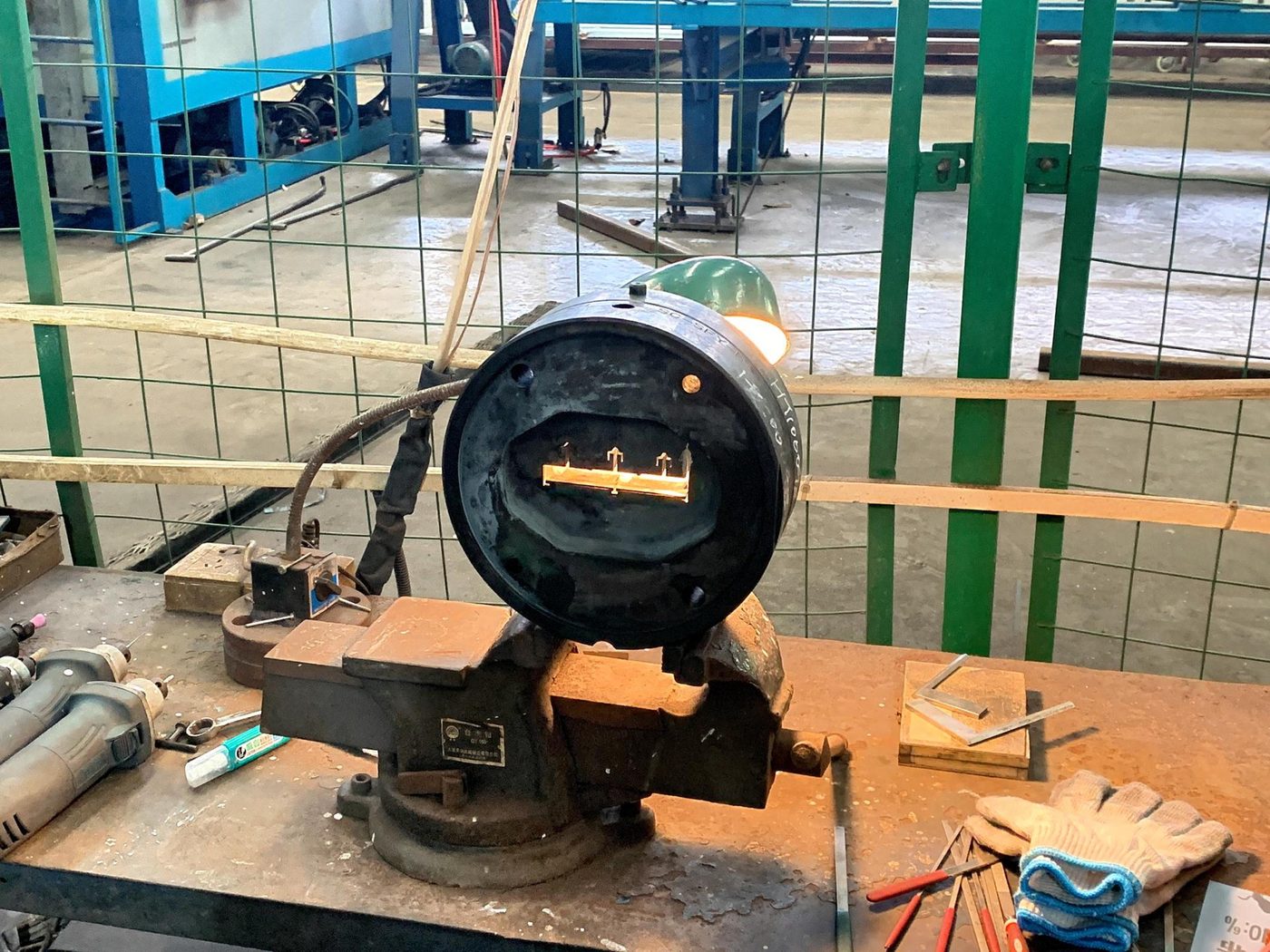
Correction is local and controlled: strip adhered aluminum, repolish to the specified roughness - commonly 0.1-0.2 um Ra on surface-critical dies - and restore the entry radius, typically 0.3-0.8 mm. Repolishing the whole bearing instead shifts the flow balance and creates new streaks.
Micro die lines are different: many fine, closely spaced longitudinal features, easiest to see under low-angle light. They come from extrudate-to-bearing interaction and near-surface deformation rather than one bearing defect, so they often survive polishing. Alkaline etching reduces them substantially but does not always remove them - which is why experienced buyers agree a limit sample instead of insisting on a perfectly line-free surface.
Pick-Up (Galling)
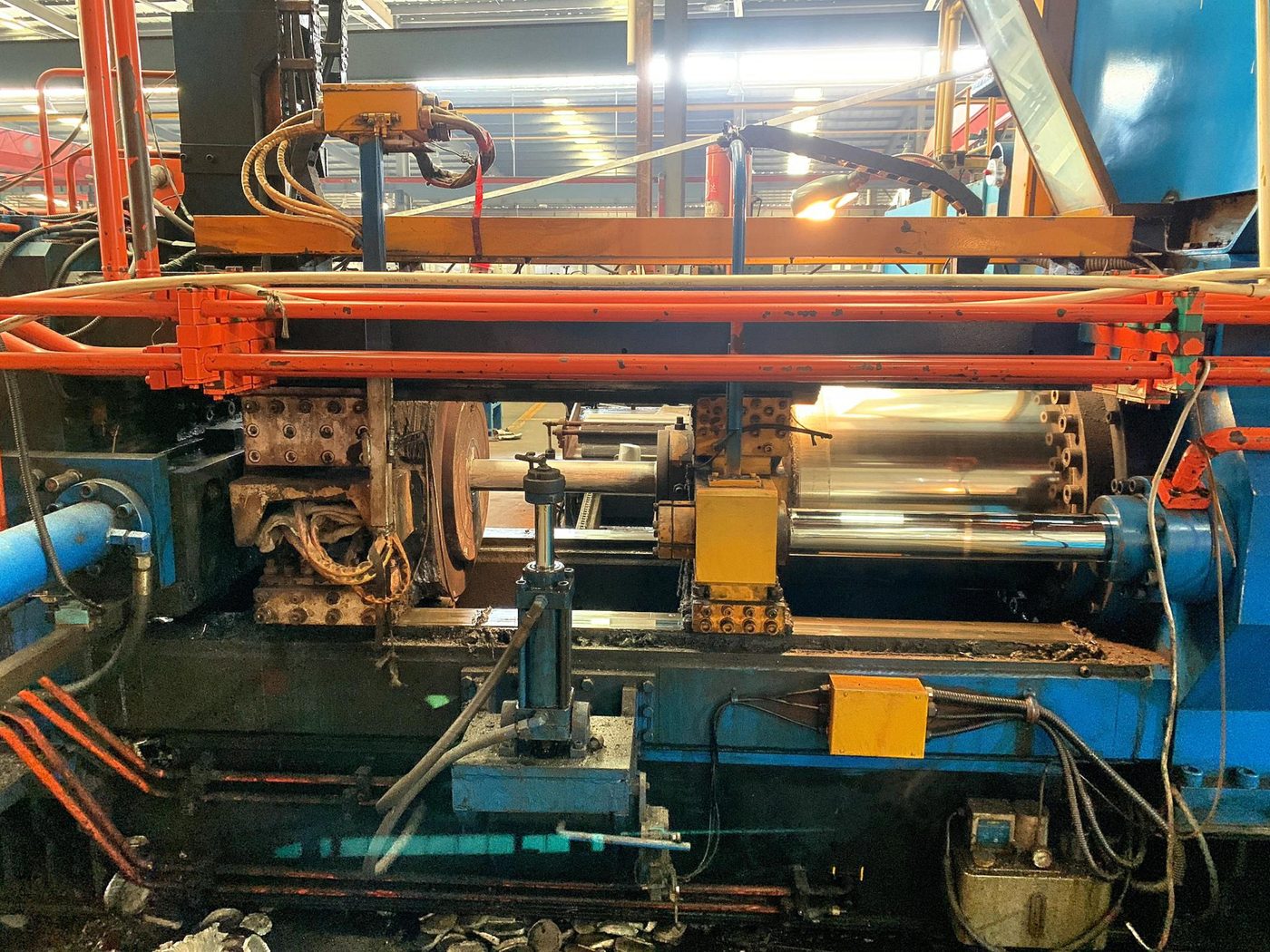
Pick-up shows as intermittent rough marks, often comet-shaped, with a compact lump at the head and a fading tail. It is adhesive wear: when local pressure and temperature overwhelm the lubricant film, aluminum welds to the bearing, builds up, then tears away and scores the profile. Because build-up and detachment cycle, the surface can go good, bad, good again within one billet, so a single spot check can miss it.
First responses are process ones: improve lubrication, reduce ram speed by roughly 10-15%, and confirm billet preheat is not at the top of the window. Then strip and repolish the bearing, because a roughened bearing accelerates further pick-up. If pick-up returns repeatedly on the same die, the bearing is too long for the wall or the entry geometry is wrong: the die needs rework.
Streaks That Only Appear After Anodizing
Streaks are longitudinal bands of different gloss or color, and their origin decides who pays to fix them.
- Friction streaks - uneven lubrication across the bearing, usually near corners and transitions, and they can change from stroke to stroke.
- Metal-flow streaks - locked to one position, caused by non-uniform flow from differences in wall thickness, port design or pre-chamber. Fixed by die design, not by the press operator.
- Structural streaks - broad matte or gloss bands that persist after polishing, coming from the billet's cast structure, segregation or coarse peripheral grain. They can never be polished out.
An etch test on a cross-section separates a structural streak from a flow streak: the first needs action at the billet supplier, the second at the die shop.
Blisters, Orange Peel and Billet Quality
Blisters are raised bubbles that appear after heat treatment or anodizing. The cause is gas trapped under the surface: hydrogen from the cast house, or air trapped when the billet is upset. Countermeasures: keep hydrogen below roughly 0.15 mL/100 g, lower preheat temperature, use a decompression ("burp") cycle after upsetting, and keep billet ends square and clean.
Orange peel is a fine dimpled texture revealed by anodizing, caused by coarse non-uniform surface grain - a billet practice issue (grain refiner, homogenization, casting), not a press issue. Typical target: surface grain size 100-220 um. Slightly higher extrusion speed refines the recrystallized structure and reduces orange peel, but too much speed invites tearing: a narrow window, not a free win.
Tearing and Charge Weld Marks
Tearing (speed cracking) appears as fine transverse cracks at edges, thin tips and corners; in bad cases the edge looks saw-toothed. It happens when exit temperature reaches the range where low-melting constituents at grain boundaries soften and bearing friction pulls the skin apart. Reduce ram speed, or lower billet temperature and keep the speed, and watch for temperature rising along the stroke - a decreasing speed profile solves that. Keep the alloy windows in mind: roughly 480-510 C for 6063 and 460-490 C for 6061, with the container typically 30-50 C below billet temperature.
Charge weld marks are the transverse band where two billets join. Every plant cuts back a defined length after each billet change, but the rule should be agreed in writing: a charge weld left inside a hollow profile is a hidden structural weakness, not just a cosmetic mark.
What to Specify in the RFQ
- Acceptance reference: EN 755-9 or ASTM B221 for dimensional and visual requirements, plus your own finish specification.
- Limit sample: agree a physical limit sample at first article instead of an absolute "no marks" clause, which is unenforceable in extrusion.
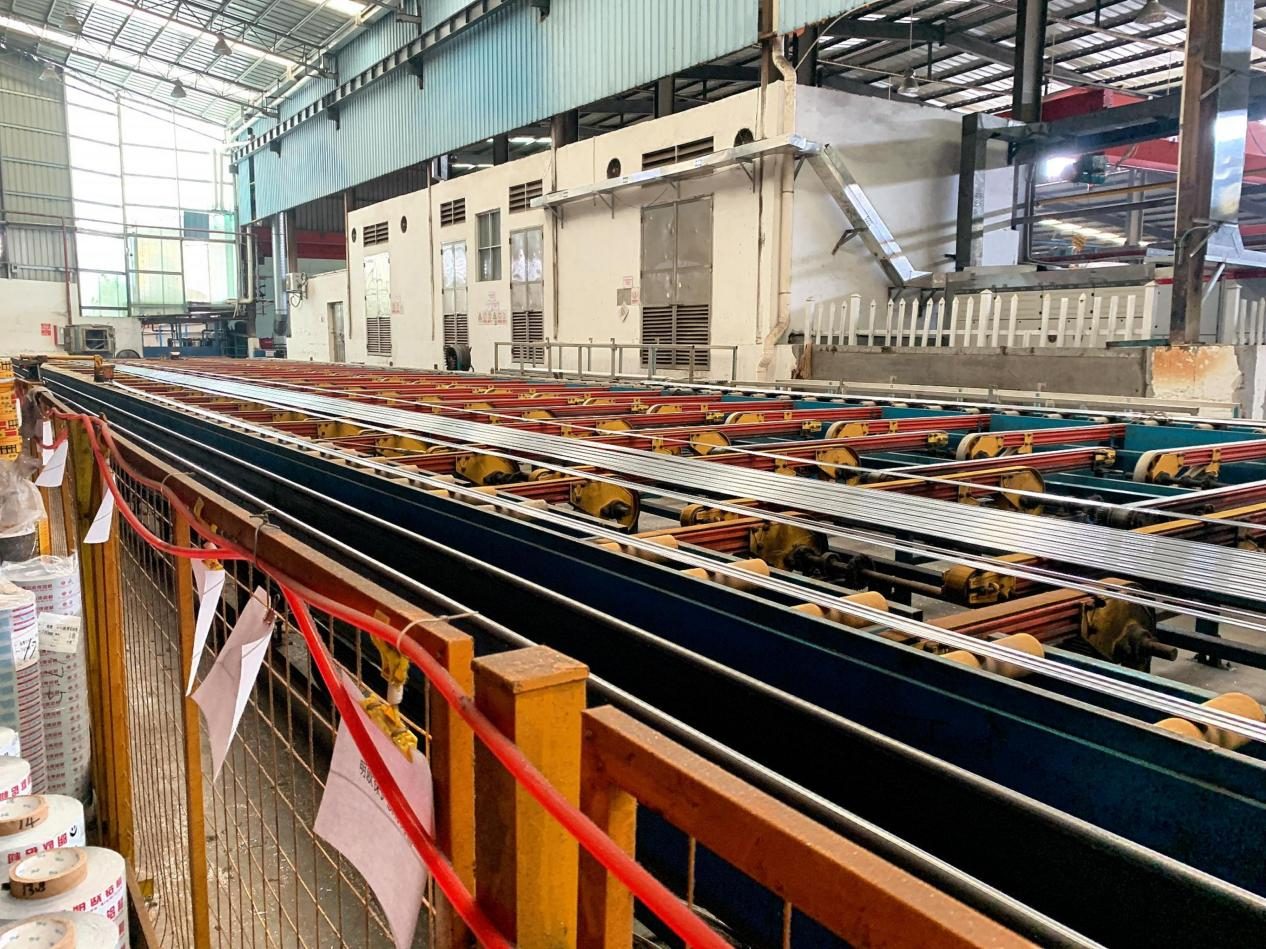
- Inspection conditions: state the light condition (for example 5,000 lux, raking light) and whether inspection happens on mill finish or after anodizing - a surface that passes before anodizing may fail after it.
- Anodize test coupon: require an etched or anodized coupon per run for any profile with a visible face.
- Cut-back rule: agree in writing how much length is scrapped after each billet change.
- Critical-face marking: mark which faces are visible in the final product so the plant can allocate bearing lengths accordingly.
- Handling and packing: for bright anodized parts, require surface-critical handling and interleaved, end-protected packing.
How SYHARVEST Controls Surface Quality
SYHARVEST Aluminium extrudes in Foshan on eight presses from 660 T to 3,600/4,000 T, covering billet diameters of 90-254 mm and the 6063, 6061 and 6005 alloys, up to a 320 mm circumscribing circle. Surface treatment runs in house - a horizontal anodizing line, a vertical powder coating line and optional electrophoresis - backed by eight CNC machines. We inspect mill finish at the press, control billet temperature and ram speed die by die, and keep bearing polish and nitriding on a scheduled cycle. Typical lead times: 5-7 days for mill-finish stock, around 12 days with surface treatment, 15-18 days with machining.
Send us your drawing with the visible faces marked and the finish you need. We will confirm the die design, the surface standard and a limit sample before production starts, so the profiles that arrive are the ones you approved, not the ones the press happened to produce.
Interested in Our Products?
Contact us today for a professional quotation tailored to your requirements.
Get a Free Quote